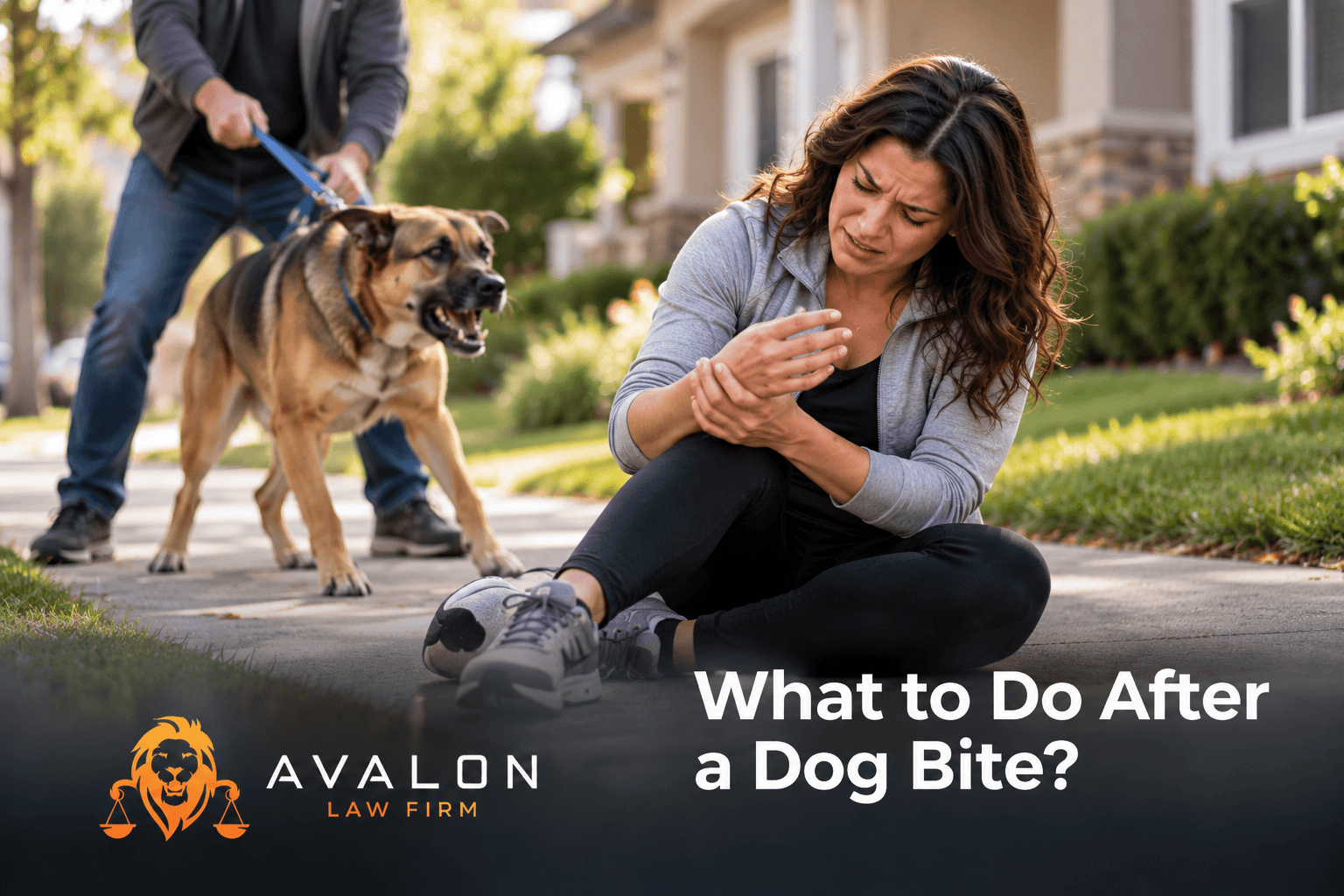
A dog bite can leave you dealing with pain, bleeding, fear, and uncertainty about what to do next. The first steps should focus on your health, identifying the dog, and preserving accurate information about what happened.
After a dog bite in California, get away from the animal safely, wash the wound, seek appropriate medical attention, identify the dog and owner, report the bite to local animal control, photograph your injuries, and save medical and other records related to the attack.
1. Get Away From the Dog Safely
Your first priority is preventing another attack.
Move to a safe location without chasing, grabbing, or trying to restrain an unfamiliar dog. If the animal remains loose or poses a continuing danger, contact local animal control or emergency services as appropriate.
If possible, note where the dog went and whether it was wearing a collar or leash.
2. Wash the Dog Bite Wound
Clean the wound promptly.
The California Department of Public Health recommends washing an animal bite with soap and keeping the area under running water for about five minutes to help flush out bacteria.
Even a relatively small puncture should be monitored carefully because animal bites can become infected.
Do not use an online article to determine whether a wound is medically serious. A healthcare professional can assess whether further treatment is needed.
A qualifying dog bite may also form the basis of a personal injury claim in California when the statutory requirements and resulting damages are supported by the evidence.
3. Get Appropriate Medical Attention
Dog bites can cause puncture wounds, torn tissue, nerve damage, infection, and scarring.
Medical evaluation may be particularly important when the bite:
- Is deep or continues bleeding
- Involves the face, hand, joint, or other vulnerable area
- Causes significant swelling or pain
- Shows redness, warmth, drainage, or other signs of infection
- Involves an unfamiliar dog or uncertain vaccination history
CDPH advises people bitten by dogs to seek medical care when appropriate and notes that healthcare providers can evaluate whether rabies prevention or other treatment is necessary.
4. Identify the Dog and Its Owner
If it is safe, collect information about the dog and owner.
Try to obtain:
- Owner’s name and contact information
- Address where the dog lives
- Description of the dog
- Vaccination information if available
- The location where the bite occurred
- Homeowners or renters insurance information when appropriate
Do not argue with the owner. Focus on obtaining accurate information.
5. Report the Bite to Local Animal Control
Report the dog bite and the information you have about the animal to the appropriate local animal-control agency.
CDPH recommends reporting dog bites so animal-control officials can review the dog’s health and vaccination status.
Keep the report number and any documents you receive. An animal control record may later become part of the evidence showing when and where the attack occurred.
6. Photograph Your Injuries as They Change
Take clear photographs as soon as reasonably possible.
Document:
- Bite marks
- Puncture wounds
- Bruising and swelling
- Stitches or bandages
- Infection or other complications
- Scarring during the healing process
Continue taking photographs periodically if the appearance of the injury changes.
These images can help create a timeline showing how the wound developed rather than relying only on photographs taken after significant healing.
For a broader guide to documenting injuries, witnesses, records, and other proof, see personal injury evidence in California.
7. Preserve Evidence From the Attack
Photograph the area where the bite happened when possible.
Relevant evidence may include:
- A damaged fence or gate
- A leash or lack of restraint
- Warning signs
- Torn or bloodied clothing
- Damage to personal belongings
- Nearby surveillance cameras
Keep damaged clothing rather than immediately throwing it away.
Also collect contact information from anyone who saw the attack, observed the dog beforehand, or heard statements made by the owner.
What Does California Law Say About Dog Bites?
California generally uses a strict-liability rule for qualifying dog bites.
Civil Code §3342 provides that a dog owner can be liable when their dog bites someone in a public place or while the person is lawfully on private property, regardless of whether the dog had previously shown vicious behavior.
That means a victim generally does not need to prove that the dog had previously bitten someone for the statute to apply.
California’s current jury instruction identifies four core elements: ownership of the dog, a bite while the victim was in a public place or lawfully on private property, harm, and the bite being a substantial factor in causing that harm.
A California dog bite lawyer can evaluate how those rules apply to the facts of a particular attack.
What If the Bite Did Not Break the Skin?
A visible puncture is not always required for California’s dog-bite statute.
California’s CACI guidance specifically notes that the skin does not necessarily have to be broken for Civil Code §3342 to apply.
For example, a bite could potentially cause bruising, crushing, or other injury without creating an open wound.
Medical documentation is still important when the injury is not visually obvious.
What About Rabies and Vaccination Records?
Rabies from dogs is uncommon in California because dogs are required to be vaccinated, but vaccination status should still be checked after a bite.
CDPH notes that bats and skunks are the animals most frequently found with rabies in California and that rabies from dogs is relatively uncommon. Animal control officials can review the dog’s vaccination status, while a healthcare provider determines whether medical rabies prevention is necessary.
Do not make that decision based solely on what the dog’s owner tells you.
What If the Dog Belongs to Someone You Know?
Many victims hesitate to report an attack because the dog belongs to a friend, neighbor, or relative.
A potential dog bite claim does not necessarily mean the dog’s owner personally pays every expense. Depending on the facts and policy terms, homeowners or renters insurance may provide liability coverage.
What If a Child Is Bitten?
Children deserve particular attention after a dog attack.
California public-health data show that children under 10 have higher emergency-department visit rates for dog-bite injuries and are more likely than older groups to be bitten on the head or face.
Facial wounds may also create concerns about scarring and future treatment.
What Should You Avoid Doing After a Dog Bite?
After an attack, avoid:
- Arguing with the dog owner
- Guessing about facts you did not observe
- Discarding damaged clothing
- Deleting photographs or messages
- Posting detailed statements about the attack online
- Exaggerating or minimizing injuries
- Signing unfamiliar insurance documents without understanding them
Keep communications accurate and preserve your records.
Conclusion
After a dog bite, focus first on safety and medical care. Wash the wound, identify the dog and owner, report the attack to animal control, photograph your injuries as they heal, and preserve medical records, clothing, witness information, and other evidence.
California’s dog bite law can impose strict liability on dog owners in qualifying circumstances, but the specific facts still matter.
Avalon Law Firm can review the animal-control report, medical documentation, photographs, insurance information, and circumstances of the attack to evaluate a California dog-bite claim.
Common Questions About Your Rights
What is the first thing I should do after a dog bite?
Get away from the dog safely, then wash the bite thoroughly with soap and running water. Seek appropriate medical care based on the severity and circumstances of the bite.
Should I report a dog bite to animal control in California?
Yes, CDPH advises reporting the bite and available information about the dog to local animal control so the animal’s health and vaccination status can be reviewed.
Is an owner liable if the dog has never bitten anyone before?
California Civil Code §3342 generally does not require proof of a previous bite or known viciousness when the statutory requirements are otherwise satisfied.
Can I have a dog bite claim if the skin was not broken?
Potentially California’s current jury instruction notes that breaking the skin is not necessarily required for the dog-bite statute to apply.
What evidence should I save after a dog bite?
Keep photographs, medical records, animal-control information, owner details, witness contacts, vaccination information, damaged clothing, expense records, and any relevant insurance communications.
Can homeowners insurance cover a dog bite?
It may, depending on the insurance policy, exclusions, dog history, and circumstances of the attack. Coverage should be evaluated based on the actual policy rather than assumed.